How to Prepare for a Client Meeting in Five Minutes
Most meeting prep fails for a simple reason: it starts too late and looks in too many places. Five minutes before the call you open your inbox, scroll a chat thread, skim last month's notes, and walk in with a vague sense of where things stand. The client remembers exactly what you promised. You remember roughly.
Good preparation isn't more reading. It's knowing which few things matter and having them in one place.
The five things worth knowing before you say hello
- What you agreed last time. The decision, in one sentence, so nobody re-opens it by accident.
- What you owe them. Anything you promised to send, check or confirm, and whether it's done.
- What they owe you. The open items on their side, so you can ask about them without it sounding like an ambush.
- What they care about right now. The concern they raised last time, or the deadline they mentioned.
- What you want from this meeting. One outcome. If you can't name it, the meeting will drift.
Where people usually look, and why it's slow
The answers exist, but they're scattered: a decision in one meeting's notes, a promise in a follow-up email, the client's real worry in a remark nobody wrote down. Searching for each one takes longer than the five minutes you have, so most people skip it and rely on memory.
A routine that fits in five minutes
- Minute one: read the last decision and the open items on both sides.
- Minute two: check anything you owe. If it's not done, decide what you'll say about it.
- Minute three: note the one thing they cared about last time.
- Minute four: write your goal for this meeting in a single line.
- Minute five: pick one question you want answered before the call ends.
That's it. You'll walk in knowing where things stand, and the conversation starts where the last one ended instead of from scratch.
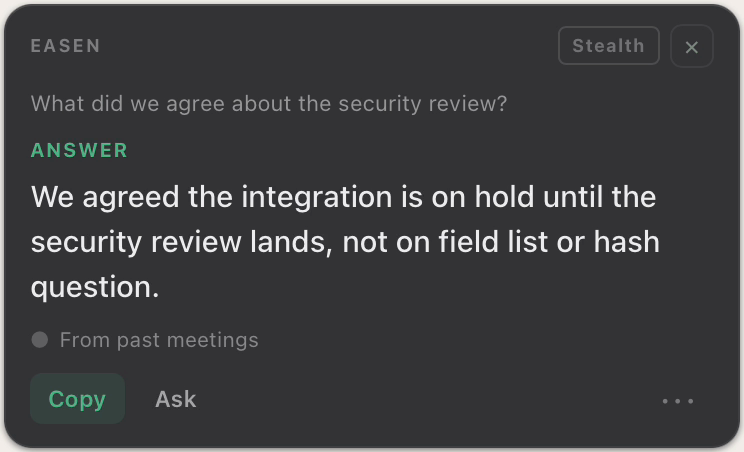
Easen does the first three minutes for you. Type who you're meeting and it shows what you agreed last time, what each of you still owes, and where to focus, drawn from your own past meetings.
See how briefings workFAQ
How long should I spend preparing for a client meeting?
For a routine check-in, five to ten focused minutes is enough if you know where to look: the last decision, open commitments on both sides, and your goal for this meeting. High-stakes meetings deserve more, but the same five questions are the core.
What should I review before a follow-up meeting?
What was agreed last time, what each side promised to do, and anything the other person raised that is still unresolved. Those three things prevent the most common follow-up mistakes: re-opening settled decisions and forgetting your own commitments.
Try Easen in your next meeting
Real-time suggestions, automatic summaries, and searchable memory, free for 7 days, no card required.
Start free